

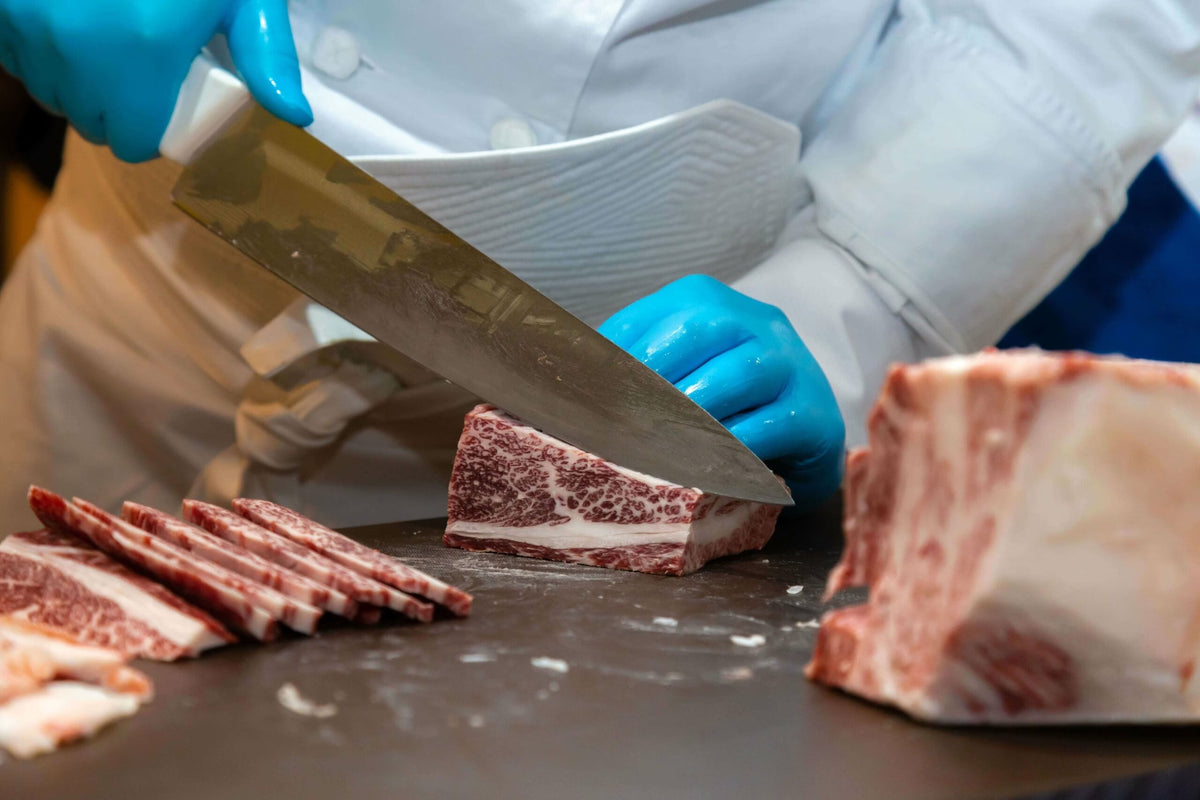
If you have heard of Wagyu, you know it is considered some of the best beef in the world. The reason comes down to one thing you can see the moment you open the package: marbling. Here is what marbling is, why Wagyu has so much of it, and how breeding makes it happen.
What marbling is
Marbling, also called intramuscular fat, is the fine white fat running through the red meat. When Wagyu cooks, that fat melts and carries flavor through the whole cut, keeping it juicy and tender. It is different from the fat between muscles, which is usually trimmed off before cooking.
In most beef the fat sits on the outside as a cap. Wagyu stores much more of it inside the muscle itself, which is why a Wagyu steak looks almost lace like and why it eats so differently.
Marbling does not make the meat greasy. Wagyu fat is high in monounsaturated fat and melts at a lower temperature than ordinary beef fat, which gives it that buttery texture.
How marbling is scored
Because marbling matters so much to taste, it is the most important factor in every Wagyu grading system. Wagyu is scored on the Beef Marbling Standard (BMS), from 1 to 12, where a higher number means more marbling. The American Wagyu Association and the Japan Wagyu Association have worked toward a shared international standard based on the same criteria.
For a full walk through BMS, A5 and the rest, read Understanding Wagyu Beef Grades.
Why Wagyu marbles: it starts with genetics
Wagyu marbles because it is bred to. Feed and care matter, but genetics decide how much intramuscular fat an animal can lay down in the first place.
- Marbling genes. Specific genes in Wagyu cattle shape both how much marbling forms and the pattern it forms in.
- Tenderness and texture. Genetics also influence muscle fiber and connective tissue, which affect how tender the meat is.
- Flavor. Certain genetic markers are linked to the flavor compounds that give Wagyu its taste.
- Growth. Wagyu grows and matures slowly, often three years or more before harvest, which gives marbling time to develop.
How breeders protect it
- Selective breeding. Breeders choose animals with the traits they want, generation after generation.
- Pure genetic lines. Keeping Fullblood lines pure, with no crossbreeding, is what preserves Wagyu’s marbling.
- DNA testing. Genetic tests help breeders identify the animals most likely to pass on strong marbling.
Where marbling shows up on the animal
The most marbled cuts come from the rib and loin, muscles that do less work, like the ribeye. Well marbled cuts also come from the shoulder, rump and leg. Breed, age and diet all change how much marbling a particular animal carries.
Finding the marbling you like
More marbling means a richer, more buttery bite. Some people love the most marbled cuts, others prefer a beefier steak with a little less. Comparing two cuts side by side is the fastest way to find your favorite.


