

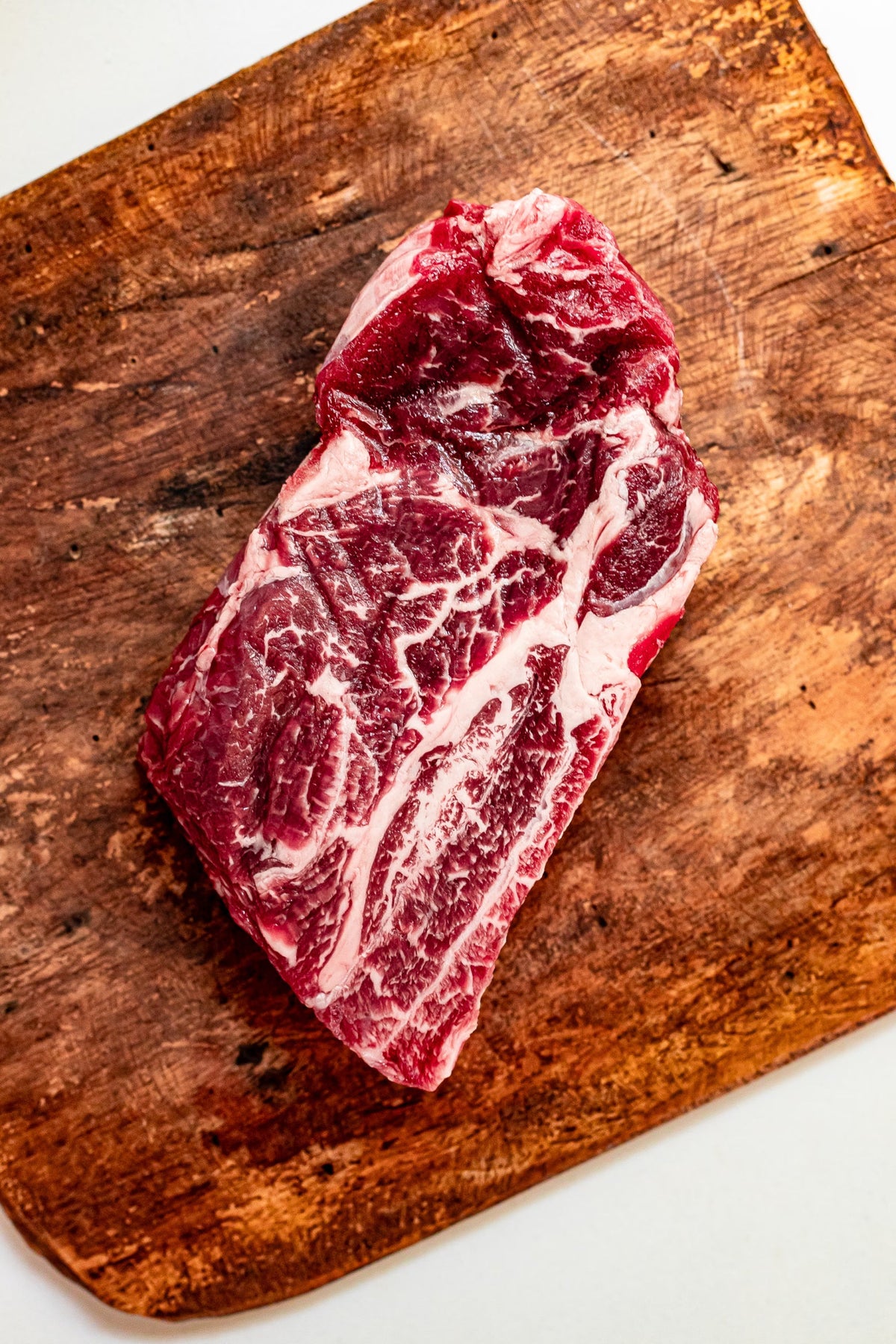
Wagyu is graded on more than one scale, and the labels can get confusing fast: Fullblood, F1, BMS 9, A5, Prime. This guide explains what each one measures, how graders decide, and how to use all of it when you choose a cut.
What a grade actually measures
Every grading system looks at the same handful of things, weighted a little differently.
- Marbling. The flecks of fat inside the muscle. It drives flavor, tenderness and juiciness, and it is the single biggest factor in every Wagyu grade. Trained graders judge it by eye, and more and more often with camera imaging that measures it precisely.
- Color and texture. Graders look for bright, even, cherry red meat and a fine grain. Darker or uneven color and a coarse grain point to lower quality.
- Maturity. Younger cattle give more tender meat. Graders read age from the bones and cartilage, which change as the animal gets older.
- Firmness and fat. The meat should be neither too soft nor too hard, with fat spread evenly.
The Beef Marbling Standard (BMS)
Wagyu marbling is scored on the Beef Marbling Standard, from 1 to 12. The higher the number, the more marbling. Most Wagyu lands between 3 and 12, and the top of the scale is the buttery, almost melting beef Wagyu is famous for.
Because Wagyu fat sits inside the muscle rather than around it, marbling is the clearest single sign of how a cut will eat. For more on why Wagyu marbles the way it does, read Why Is Wagyu So Marbled?
Japanese grades: A5, A4, A3
Japan combines two scores into one grade.
- The letter is yield, from A to C: how much usable meat comes from the carcass. A is the highest.
- The number is quality, from 1 to 5, and it is driven mostly by marbling.
A5 is the top grade, with BMS 8 to 12 and the highest yield. A4 is slightly less marbled and still very rich. A3 balances marbling and leanness, and suits everyday cooking. Regional names such as Kobe, Matsusaka and Ohmi describe where Japanese Wagyu was raised, not a separate grade.
USDA grades: Prime, Choice, Select
In the United States, the USDA grades beef as Prime, Choice and Select, with lower grades such as Standard and Commercial below them. Prime has the most marbling. American Wagyu often grades at the very top of Prime and beyond, which is why many producers also use the BMS scale to show how far past Prime a cut goes.
Fullblood, F1 and F2: the genetics behind the grade
Grades describe the meat. Breeding describes the animal, and it predicts the grade.
- Fullblood Wagyu is 100 percent Wagyu with no crossbreeding. It gives the most consistent, highest marbling.
- F1 Wagyu is a first generation cross, about 50 percent Wagyu and 50 percent another breed. It keeps much of the Wagyu richness with a beefier, slightly leaner eat.
- F2 Wagyu is about 75 percent Wagyu, closer to Fullblood in marbling and texture.
Holy Wagyu sells both Fullblood and F1 Wagyu, all glatt kosher.
How to choose
- Think about the occasion. Save the most marbled Fullblood cuts for a special dinner, where a few slices go a long way.
- Think about the cooking. Very rich cuts shine seared hot and fast and served in smaller portions. F1 is great for a full size steak or the grill.
- Go by how you like to eat. If you love richness, go higher on marbling. If you like a beefier bite, F1 is a great place to start.
Grades are a guide, not a rule. The best way to learn what you like is to taste two cuts side by side.


